

Powering Modern Utilities with Reliable Connectivity
The energy sector is transforming at an unprecedented pace. The rise of renewable energy, electric vehicles, and intelligent grid automation means that data is now just as vital as electricity itself. From real-time grid control to managing millions of smart meters (AMI), utilities depend on communications networks that are always available and fully reliable.
To meet these demands, many utilities are moving away from public networks and investing in private mobile infrastructure. By owning both the Radio Access Network (RAN) and core network, they gain complete control over security, maintenance, and resilience—ensuring operations continue even during storms, outages, or other disruptions.
Why 450 MHz is the Gold Standard
When building private networks for critical infrastructure, spectrum selection is key. The 450 MHz band (LTE-450) has become the leading choice for utilities worldwide.
Its low frequency enables wide-area coverage with fewer base stations, making it ideal for rural and remote regions. At the same time, its superior propagation characteristics allow signals to penetrate deep into buildings, basements, and underground installations—areas where higher frequencies struggle.
The global ecosystem around 450 MHz continues to grow, supported by organizations such as the 450 MHz Alliance. This ensures access to certified devices, standardized solutions, and long-term viability, making LTE-450 both a technically and commercially sound investment.
The “Best Effort” Trap in Critical Infrastructure
In critical infrastructure environments, “best effort” connectivity is simply not enough. Energy systems often require ultra-low latency—sometimes below 10 milliseconds—and near-perfect availability of 99.999% or higher. Even micro-outages that might go unnoticed in consumer networks can have serious consequences for power distribution.
Maintaining grid stability demands more than reactive monitoring. Utilities must proactively detect performance degradation before it impacts operations.
Enter TWAMP: The Defacto Standard for Active Network Assurance
The Two-Way Active Measurement Protocol (TWAMP), defined by the IETF (RFC 5357), has become the industry standard for high-precision, real-time performance monitoring.
Unlike passive monitoring tools or simple ping tests, TWAMP actively sends test packets across the network, continuously measuring latency, packet loss, and jitter with microsecond-level accuracy. This creates a constant, real-time view of network health—effectively acting as a heartbeat for critical infrastructure.
The Value of Active Monitoring in Energy Networks
Implementing centralized, TWAMP-based active monitoring delivers significant advantages for utilities:
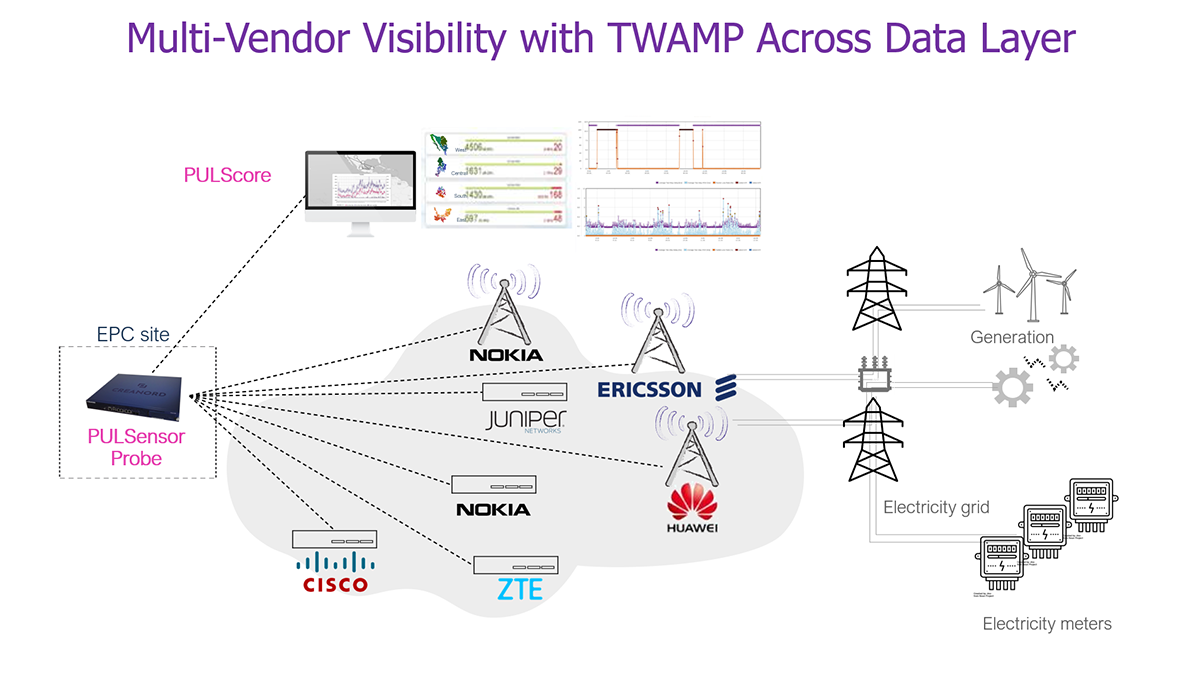
- Multi-Vendor Visibility
TWAMP is widely supported across network equipment vendors, allowing utilities to monitor their entire infrastructure from a single platform—even in multi-vendor environments. - Cost Efficient
Existing network devices can act as TWAMP reflectors, meaning only a limited number of centralized probes are required. Remote activation eliminates the need for costly on-site interventions. - Consistenty
A standardized protocol ensures uniform, high-quality performance data across the entire network. This removes the complexity and inaccuracies often associated with combining data from multiple vendor systems. - Validated Resilience
Active monitoring validates that the network is performing as designed. It confirms Quality of Service (QoS) prioritization and provides measurable evidence that SLAs are met over time.
Securing the Future of the Grid
As utilities continue to modernize with private 450 MHz networks, ensuring consistent performance is no longer optional—it’s essential. Active monitoring with TWAMP transforms raw network data into actionable insights, enabling utilities to maintain reliability, optimize performance, and prevent outages before they occur.
With decades of experience delivering carrier-grade assurance solutions, Creanord supports some of the most demanding networks in the world. Today, as energy systems become more complex and critical, that expertise helps ensure uninterrupted service—ensuring that the lights stay on, keeping data flowing and the smart grid operating at its full potential.